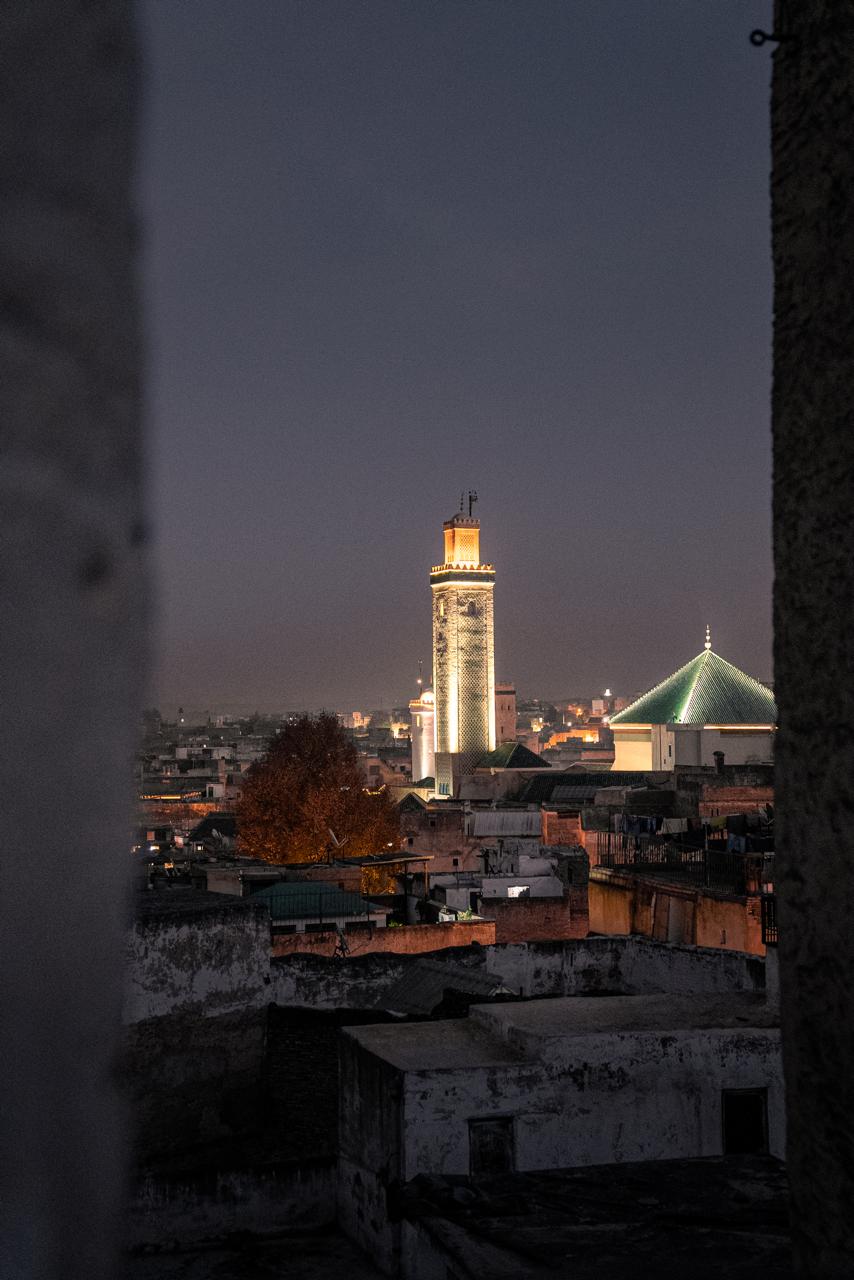
The old medina of Fes is a city without cars, older than most of Europe's universities. How to spend a first day there, why a guide helps, and what not to miss.
Fes el-Bali is the oldest part of Fes and one of the largest car-free old towns anywhere. Its lanes were laid out long before the motor car, and goods still move through them on mules and handcarts. It has been on the UNESCO World Heritage list since 1981. A first visit can be overwhelming; a good first day is mostly a matter of pace.
Start early, with a guide
The medina wakes slowly and fills fast. Start around nine with a licensed city guide and you will have the lanes before the crowds and the workshops as they open.
A guide is not essential, but on a first day it makes the difference between a frustrating morning and a remarkable one. There are few signs and fewer straight lines, and many corners look alike. A guide knows which doors open onto courtyards, which craftsmen are happy to be watched, and how to get you from one end of the medina to the other without retracing your steps. On all our trips that include Fes, a full guided day is part of the plan.
The madrasas
The medieval schools of Fes are among the finest buildings in Morocco: courtyards of carved cedar, stucco and tilework around a fountain, with student rooms above. The Bou Inania and the Al-Attarine madrasas are the two most often visited. Go slowly, and look up.
Al-Qarawiyyin
At the heart of the medina stands Al-Qarawiyyin, founded in 859 and traditionally credited to Fatima al-Fihri, a woman from Kairouan. It is often described as the oldest university in the world still teaching today. The mosque itself is closed to non-Muslims, but from the doorways you can see into its courtyard, and its green roofs and minaret are visible from the rooftops around it.
The tanneries
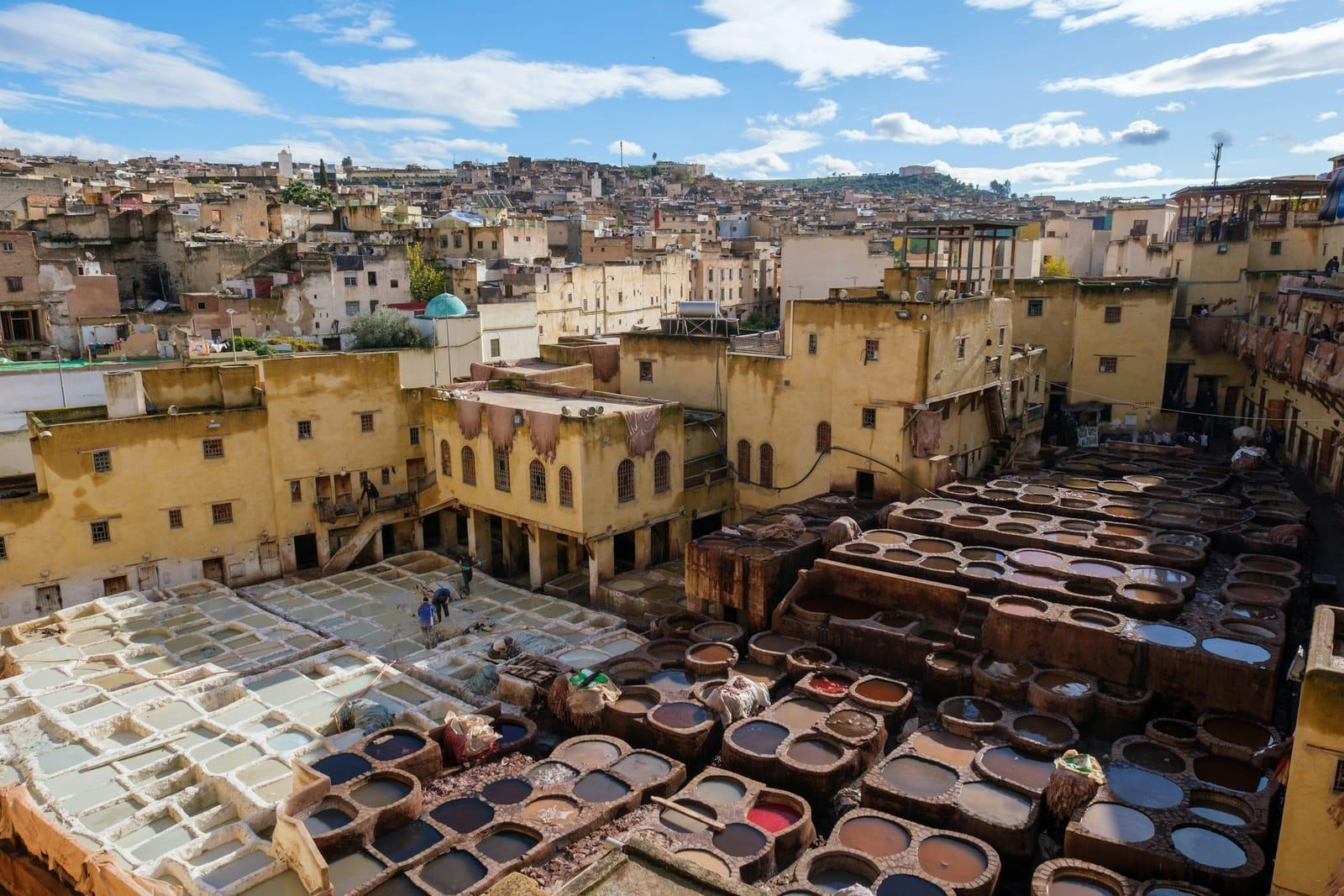
The Chouara tannery is the best known in Fes, a honeycomb of stone vats where hides are soaked and dyed much as they have been for centuries. You watch from the terraces of the leather shops around it. The smell is strong; shops often hand out mint to hold under your nose. There is no obligation to buy, though it is courteous to accept the view graciously.
The craft quarters
Fes el-Bali is organised by trade, and walking from one quarter to the next is the best way to understand it: the metalworkers hammering trays, the weavers, the woodcarvers cutting geometric panels from cedar, the potters with their blue-and-white Fes ware. The Nejjarine square, with its tiled fountain, is a good place to pause.
Practical notes
- Shoes: comfortable, closed and with grip. Lanes are steep in places and can be slippery.
- Dress: cover shoulders and knees; you are walking through a living neighbourhood, not a museum.
- Photographs: ask before photographing people, and accept a no gracefully.
- Lunch: your guide will know where to eat well inside the medina.
- Stay inside: a riad within the walls lets you walk out early and come back to quiet in the afternoon.
How Fes fits a journey
Fes sits well at either end of a desert crossing. Our five-day journey from Casablanca gives you two nights and a full guided day in Fes before the Sahara. From Marrakech, the three-day crossing by the Middle Atlas ends with a day in the medina, and the four-day trip to Chefchaouen adds the blue town of the Rif. To see all four imperial cities, Marrakech, Meknes, Fes and Rabat, take our five-day circuit. And to see Fes as one chapter of the whole country, from the Atlantic and Chefchaouen to the Sahara, the M'Goun valley and Marrakech, there is our flagship, the Journey of Contrasts in thirteen days.
Frequently asked questions
Do we need a guide in the Fes medina?
How old is the University of Al-Qarawiyyin?
Trips that go here
Guided by the team who wrote this guide.
 Private
Marrakech to Fes in 3 Days
One way from Marrakech to Fes over the High Atlas and the Middle Atlas, with Aït Ben Haddou, Ifrane, the Azrou cedars and a full day in the Fes medina.
- Length
- 3 days
- Starts from
- Marrakech
- From
- €299/ person for 14+
 Private
Casablanca to Marrakech by Fes and the Sahara, 5 Days
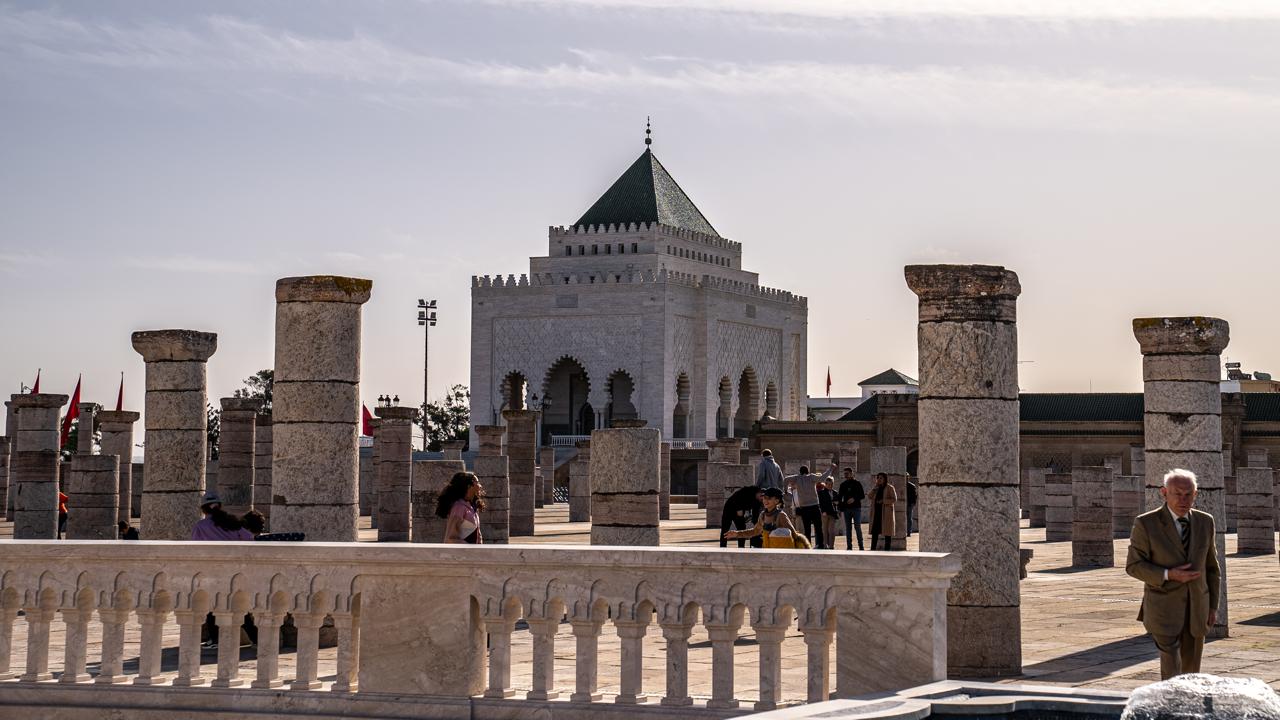
Across Morocco from north to south in five days: Rabat, Volubilis, Meknes, two nights in Fes, the Erg Chebbi dunes and the gorges home to Marrakech.
- Length
- 5 days
- Starts from
- Casablanca
- From
- €470/ person for 6+
 Private
Marrakech to Chefchaouen in 4 Days
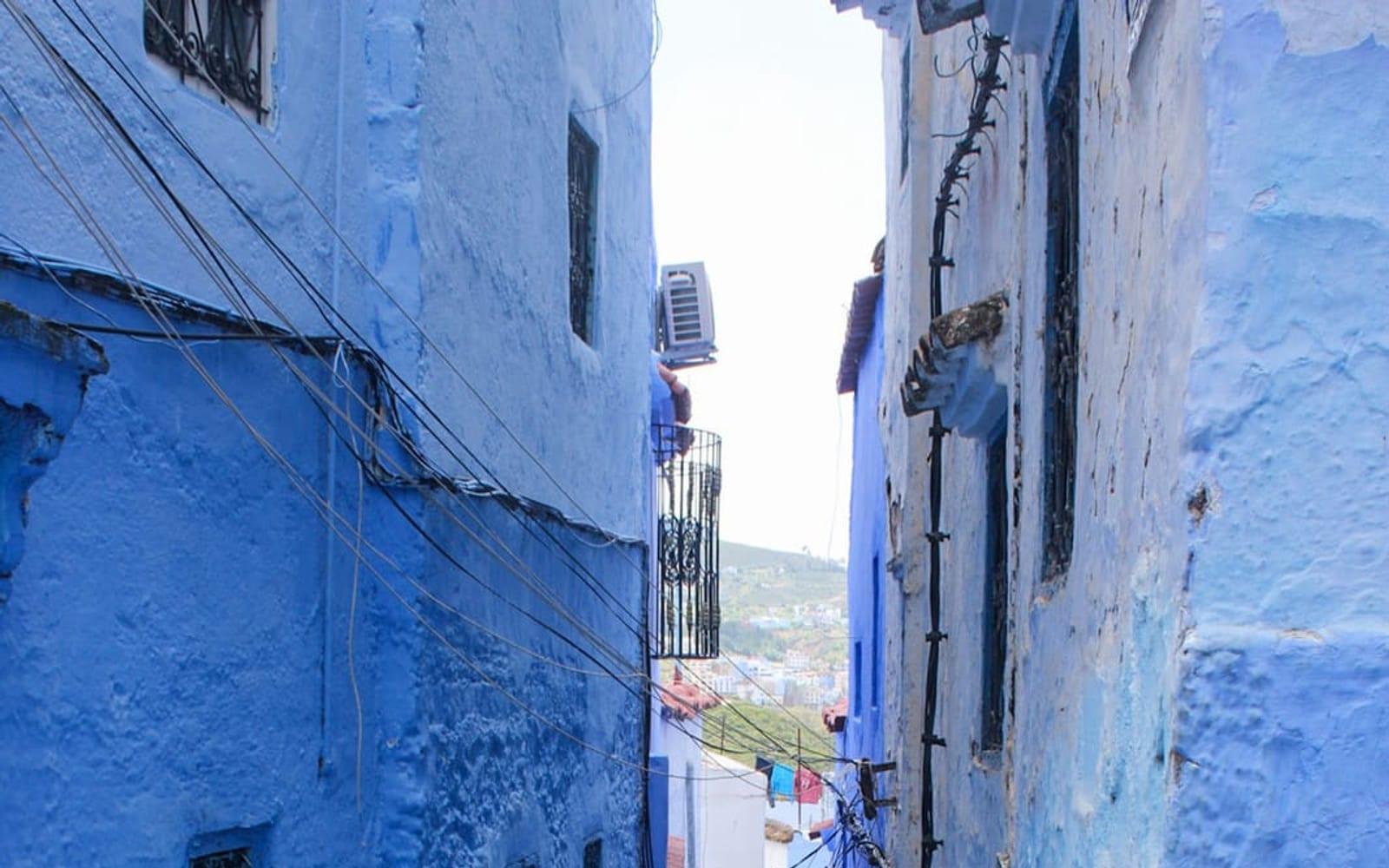
One way north from Marrakech to the blue town of Chefchaouen, with a full day in the Fes medina and the Roman ruins of Volubilis on the way.
- Length
- 4 days
- Starts from
- Marrakech
- From
- €350/ person for 6+